- Published
- 4 December 2025
Commonwealth Distance Learning scholarship recipients reflect on their first months of study on the Disability Studies, Rights and Inclusion MSc.
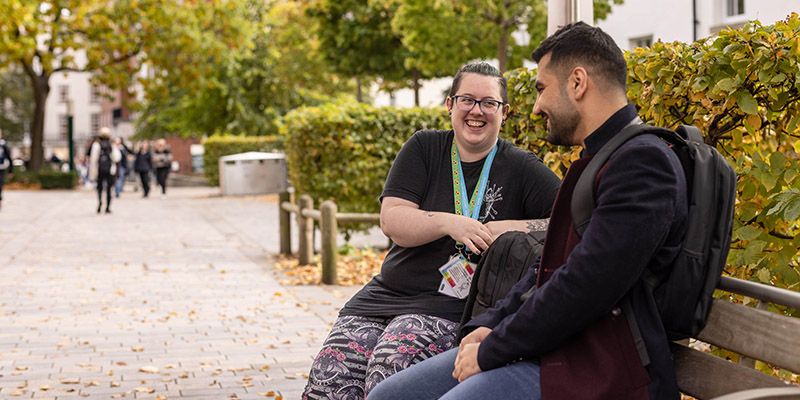
In the spring of 2025, the University of Leeds’ ground-breaking Disability Studies, Rights and Inclusion course was awarded five Commonwealth Distance Learning Masters Scholarships. These fully funded scholarships provided a ‘life changing’ opportunity for five students from across the Commonwealth to study the two-year, fully online Masters degree at Leeds.
Secured by Professor Hannah Morgan, Chair in Disability Studies, the scholarships enable students to undertake fully funded, 100% remote study, with an equipment and support grant of £2,225 – an exceptional opportunity awarded after a competitive application process.
These scholarships offer life changing opportunities to the recipients – thus advancing our vision to change the world, for the good of all.
The course’s online delivery allows students to study from anywhere in the world, making it particularly accessible to Commonwealth scholars. The course aims to develop skills that enhance the well-being of individuals and communities, deepening understanding of disability rights and social justice, and equip graduates to address the complex global challenges faced by people with disabilities.
The Commonwealth Scholarship aims to attract ‘individuals with outstanding talent and identifiable potential from all backgrounds and supporting them to become leaders and innovators on returning to their home countries.’
Teaching for this cohort began in September. We caught up with all five students who successfully secured the scholarship: Berndina from Belize, Timóteo from Mozambique, Julius from Kenya, Aarthi from Mauritius, and Ggaliwango from Uganda. We asked them about their backgrounds, the opportunities created by the scholarship, and how they expect the course to impact their lives.
From personal struggle to professional success

Berndina found a “renewed sense of purpose helping people with disabilities” after pursuing a career in social work. Her primary and high-school years were made challenging by diagnoses of nystagmus, strabismus, and myopia, which made engaging with subjects like mathematics and chemistry difficult.
This pushed her towards the social sciences. “Despite the disappointment of having to change academic aspirations, I found a renewed sense of purpose in helping others with disabilities. Inspired by my own challenges, I became driven to support people with disabilities who often faced even greater barriers.”
She went on to earn a Bachelors degree in Youth Development Work and a Masters degree in Public Sector Management from the University of the West Indies. Distance learning improved her academic performance and allowed her to “become a source of hope and a leader for other individuals with disabilities.”
Since beginning the Disability Studies, Rights and Inclusion course at Leeds, Berndina shared that, “by the end of the first module, the course had helped me refine my vision for the goals I want to achieve at the organisation where I work. The assigned readings provided significant insight into the issues I have grappled with both personally and professionally. I have also been able to contextualise and gain new knowledge, particularly in how governments may view people with disabilities and choose how to respond to their concerns.”
Berndina hopes to apply her learnings from the Masters by becoming “a key source of guidance in the establishment and mission of Belize’s National Disability Commission, “and by contributing to the creation and oversight of a national disabilities strategic plan developed collaboratively with government ministries, civil society organisations and stakeholders.
Read more about Berndina’s experiences studying our Disability Studies, Rights and Inclusion course.
An advocate for inclusive infrastructure development
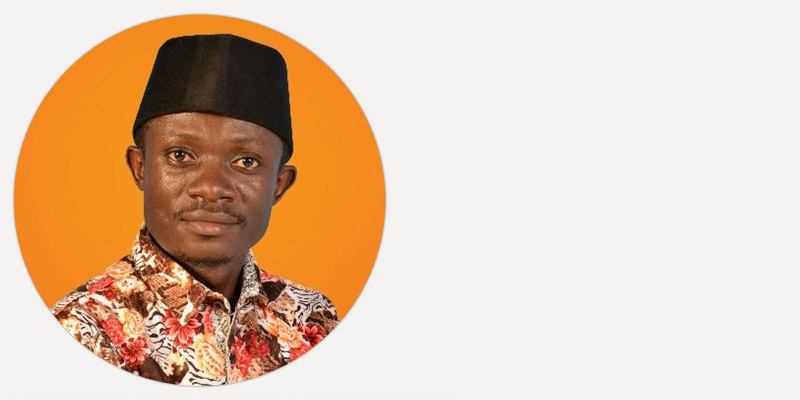
Julius, the first in his family of nine to earn a university degree, has achieved an impressive academic record: “a Bachelor's degree in Project Planning and Management from the University of Nairobi, Kenya; a Master of Science in Public Policy from the University of Bristol as a Chevening Scholar; and a Master of Arts in International Development, specialising in Infrastructure Development, Governance and Policy, from American University in Washington, D.C.”
His professional career spans both the private and public sectors, where he has “advocated for the rights of persons with disabilities in economic empowerment, political leadership inclusion”. Julius is passionate about inclusive and sustainable infrastructure planning and development for all.
His lived experience shapes his interest and passion for disability advocacy. He applied for the Commonwealth Scholarship to deepen his knowledge of disability rights and enhance his professional impact. “My lived experience has shaped my approach to advocacy. I now seek to deepen my academic knowledge of disability studies to complement my professional experience and broaden my career prospects.”
He hopes to continue championing “the integration of disability inclusion into infrastructure planning and development across Africa, ensuring that future projects are accessible, equitable, and responsive to the needs of persons with disabilities.”
Read more about Julius’ experiences studying our Disability Studies, Rights and Inclusion course.
A champion for equality, accessibility, and inclusive development
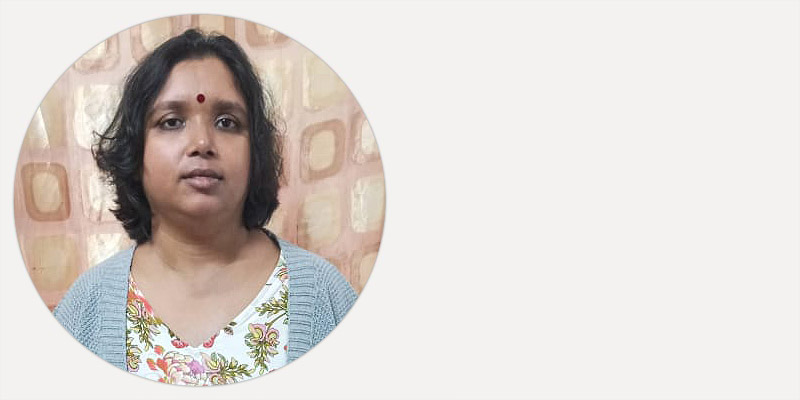
Aarthi faced significant challenges in education through glaucoma since birth, in 2001 she lost all remaining sight, though was undeterred in pursuing further education, “learning Braille became essential for me to continue my studies, even though access to Braille textbooks and adapted learning materials was extremely limited during my secondary schooling.”
When she applied to the University of Mauritius in 2006, her application was initially turned down solely because she was blind. After challenging the decision she was later admitted, completing a Bachelor of Law (LLB) in 2009.
Aarthi later encountered barriers in employment but “refused to give up on my right to full participation in society.”
Her activism led to national and international recognition, including participation in the Nelson Mandela Washington Fellowship and the Women’s Institute on Leadership and Disability run by Mobility International USA. These experiences “deepened my commitment to promoting equality, accessibility, and inclusive development.” She later earned an MBA through a scholarship from Ducere Business School.
Today, Aarthi works at the Special Education Needs Authority (SENA) as a Resource Person for Learners with Visual Impairments. She supports inclusive education and strives to ensure that "disability should never be a barrier to education or opportunity.”
Regarding the scholarship, she said: “I see this opportunity as a means to deepen my understanding of the persistent gaps between disability-related policies and their implementation – gaps I have experienced firsthand. Professionally, I aspire to take on a leadership role in international disability development, contributing to the advancement of the rights of persons with disabilities in Mauritius, across Africa and globally.”
Read more about Aarthi’s experiences studying our Disability Studies, Rights and Inclusion course.
An advocate for AI-driven assistive technologies

Ggaliwango is a machine learning and intelligent systems engineer with an MSc in Computer Science and Engineering and a BSc in Computer Science, both with distinction. He serves as the chairperson for staff with disabilities at Makerere University, with and is a “creator and an advocate for AI-driven assistive technologies.”
He believes strongly in "the privilege of involving users, particularly individuals with disabilities, in the custom design and development of technologies for themselves.” His achievements include, developing Uganda’s first Healthcare Sign Language Dictionary, self-driving wheelchairs, and visual-acoustic models that help blind people experience the world more naturally.
Regarding the course’s impact, he said: “the course has already begun to transform my conceptualisation of what disability is. It has empowered me with tools to critically examine and contextualise transformative ways to operationalise locally co-created assistive technologies in Uganda.”
The scholarship is enabling him to shift focus from “primarily a tool developer and researcher to becoming a rights-based systems innovator and policy leader,” allowing him to use policy and rights-based frameworks to transform initiatives like the sign language dictionary into impactful national interventions.
Creating meaningful change
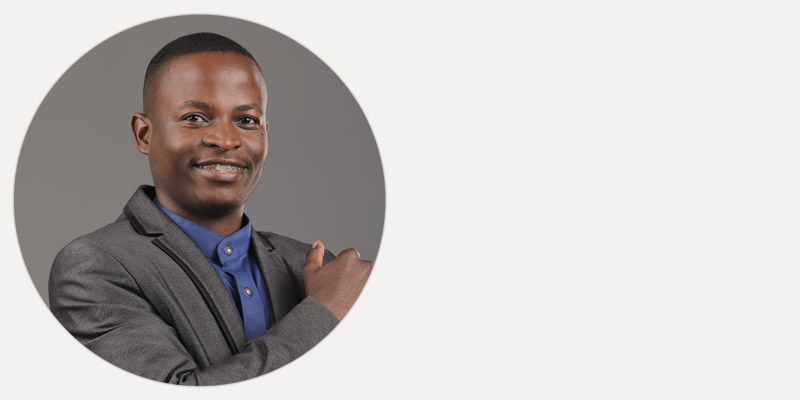
Timóteo works as a Research and Policy Officer at the Forum of Mozambican Associations of Persons with Disabilities (FAMOD), where he coordinates “research initiatives and projects focused on persons with disabilities.” He holds a postgraduate degree in Human Rights from the University of Coimbra and a Bachelor’s degree in Political Science from Eduardo Mondlane University.
He aims to use the scholarship to “strengthen my foundation and expertise, enabling me to become a recognised professional in the disability sector in Mozambique,” and to “build connections and collaborations with leading activists, organisations, and advocates around the world.”
Timóteo plans to apply his learning by implementing projects that support persons with disabilities – especially youth, women, and organisations in rural areas. After completing the MSc, he hopes to “promote greater inclusion, empowerment, and access to opportunities for those who are often most marginalised, contributing to meaningful change and the strengthening of the disability movement in my country.”
Read more about Timóteo’s experiences studying our Disability Studies, Rights and Inclusion course.
Disability Studies, Rights and Inclusion MSc
Find out more about our groundbreaking MSc on the course page.